Status Quo Bias
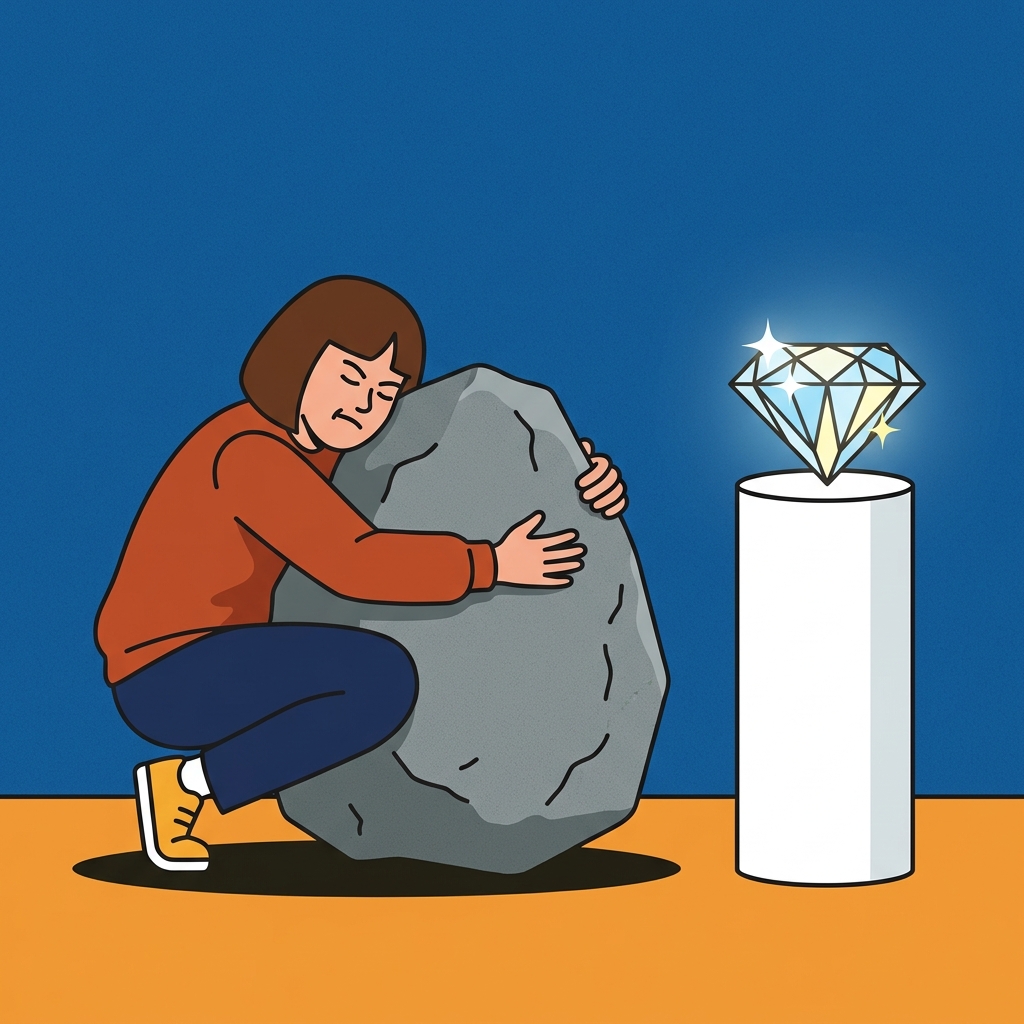
The psychological preference for things to stay exactly as they are. You stick to the default option not because it's superior, but because change feels like an existential threat.
THE TRAP TEST
1 / 5Your company rolls out a new, highly efficient software tool. How do you respond?
👇 Choose one option:
The Energy Conservation Protocol
The human brain is a massive energy hog. To survive, it relies on heuristics and defaults. Making a change requires active cognitive effort—evaluating new options, calculating risks, and breaking habits. The Status Quo Bias is your brain's lazy attempt to conserve calories by pretending the current state is the optimal state. It hallucinates a premium on 'how things are' simply to avoid the metabolic cost of figuring out 'how things could be.'
Blockbuster's Default to Death
In 2000, Blockbuster had the chance to buy a struggling DVD-by-mail startup called Netflix for a mere $50 million. Blockbuster's executives laughed them out of the room. They were paralyzed by the Status Quo Bias, fiercely protecting their legacy revenue model of brick-and-mortar stores and late fees. They chose the comfort of the familiar over the friction of the future. Netflix is now worth billions; Blockbuster is a punchline with a single remaining store in Oregon.
The Disruption Protocol
The Zero-Base Test
If you didn't already own this item, hold this belief, or use this process, would you actively choose it today? If no, kill it.
Invert the Default
Force yourself to justify staying the same, rather than justifying the change. Make inaction the choice that requires an explanation.
Micro-Mutations
Introduce small, low-risk changes into your routines regularly to train your amygdala that 'new' does not equal 'dangerous.'