The Ostrich Effect
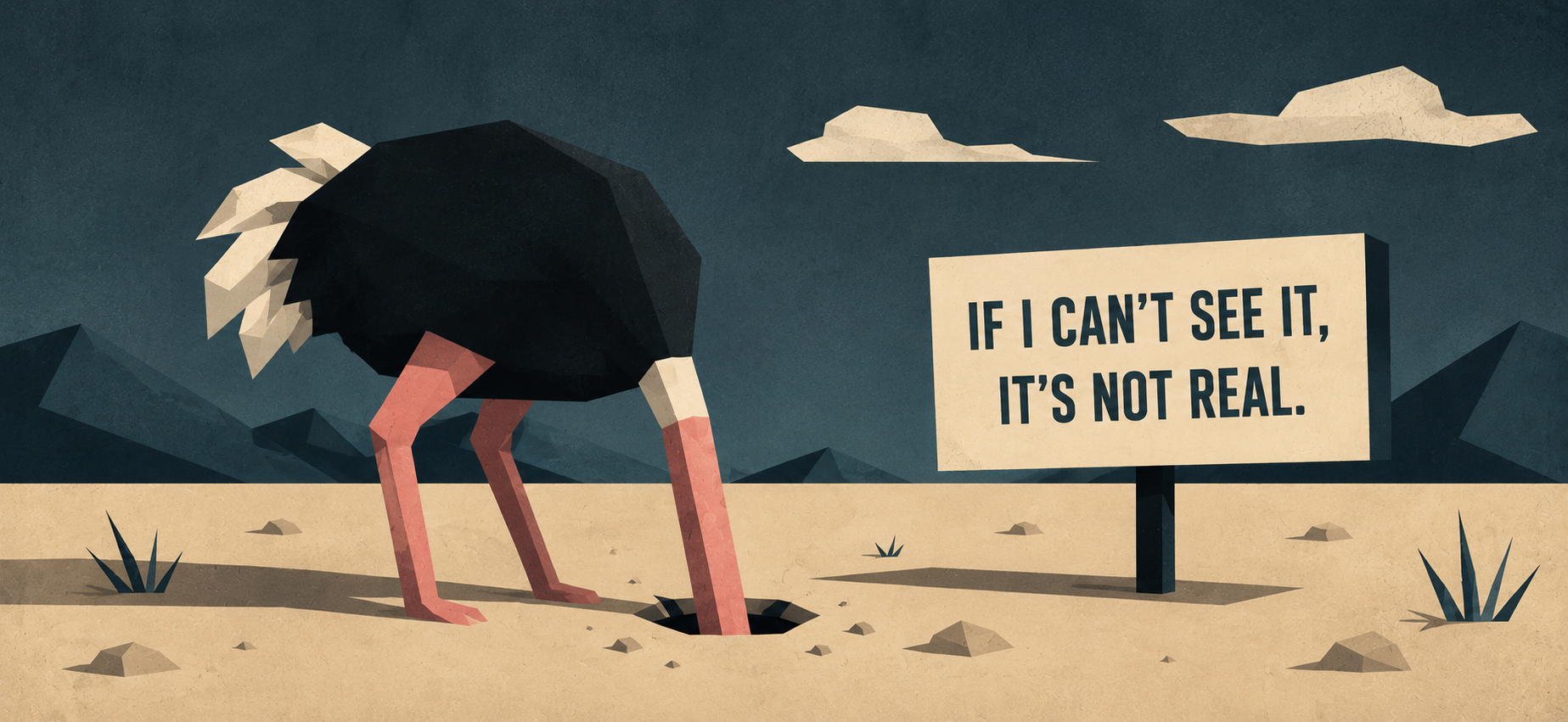
The cognitive mechanism of burying your head in the sand to avoid negative information. If you don't look at the plunging metrics, you pretend the bleeding isn't happening.
THE TRAP TEST
1 / 5Your stock portfolio is taking a brutal beating in a market crash.
👇 Choose one option:
The Reality Distortion Field
The Ostrich Effect is driven by a desperate aversion to cognitive dissonance and emotional pain. When incoming information conflicts with your desired state (e.g., being wealthy, healthy, or successful), the brain triggers a defense mechanism: deliberate blindness. It calculates that the short-term anxiety of facing bad news is worse than the long-term catastrophe of ignoring it. It is the ultimate triumph of immediate comfort over objective reality.
The 2008 Subprime Blindfold
Leading up to the 2008 financial crisis, massive institutions and individual investors alike actively ignored glaring red flags. The housing market was built on toxic, defaulting subprime loans, but as long as the music was playing, nobody wanted to look at the underlying math. Executives buried the data, ratings agencies turned a blind eye, and the global economy operated under a collective Ostrich Effect. When they were finally forced to pull their heads out of the sand, the global economy collapsed.
The Radical Transparency Protocol
Automate the Audit
Set up unavoidable alerts for your blind spots. Force bad news to be pushed to you via notifications so you cannot passively ignore it.
Detach Ego from Data
Treat negative metrics as raw coordinates, not personal indictments. The numbers are just telling you where you are on the map.
Schedule the Pain
Create a mandatory 'Ugly Hour' every week where you review failing projects, bad finances, and negative feedback. Normalize the discomfort.