
The Gambler's Fallacy
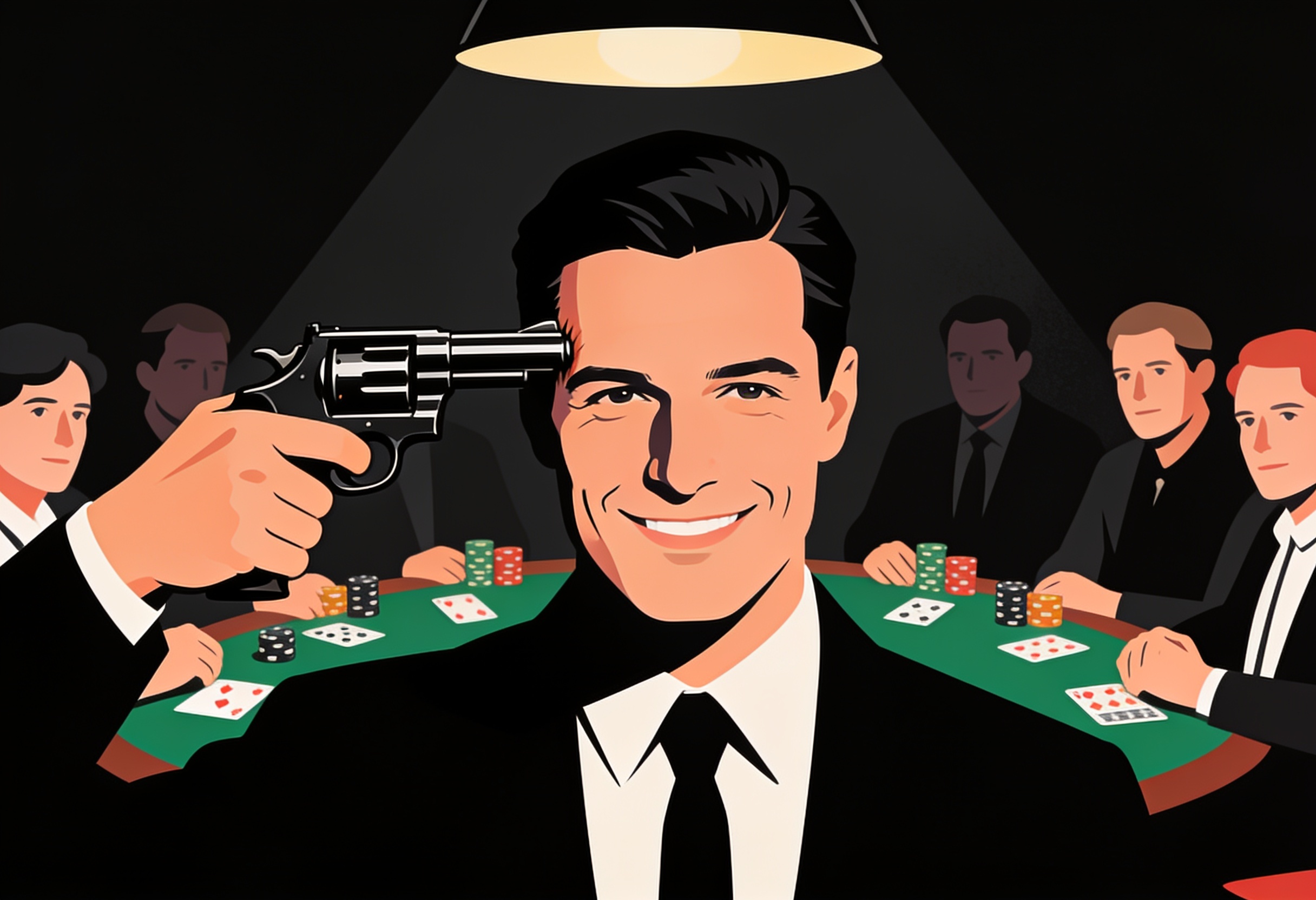
The irrational, destructive belief that past independent events magically influence future probabilities.
THE TRAP TEST
1 / 5You flip a fair coin and it lands on Heads five times in a row. The next flip...
👇 Choose one option:
The Cosmic Ledger Delusion
The human brain is an aggressive pattern-recognition machine. It hates randomness. When we see a streak of identical outcomes, our brain incorrectly assumes the universe operates on a 'cosmic ledger' that must balance itself out in the short term. We project our human sense of 'fairness' onto cold, unfeeling mathematics. This cognitive error forces us to believe that independent events (like a coin flip or a roulette spin) are connected by an invisible string of probability, leading to disastrous financial and strategic decisions.
The Monte Carlo Bloodbath
On August 18, 1913, at the Casino de Monte-Carlo, the roulette ball landed on black. Then it hit black again. And again. As the streak continued, gamblers flocked to the table, desperately throwing massive bets on red, convinced it was mathematically 'due' to hit. The ball landed on black 26 times in a row—a 1 in 66.6 million probability. By the time red finally hit, the gamblers had been wiped out, losing millions of francs in a collective mathematical hallucination. The casino walked away with a fortune, funded entirely by a cognitive bias.
The Independence Protocol
Isolate the Event
Force yourself to ask: 'Does the previous event have any physical mechanism to influence this current event?' If no, reset your expectations to the baseline odds.
Kill the 'Due' Delusion
Eradicate the word 'due' from your vocabulary. Nothing is 'due' to happen. The universe does not owe you regression to the mean.
Focus on Expected Value (EV)
Make decisions based purely on the Expected Value of the next immediate action, entirely divorcing it from the emotional weight of your past losses or streaks.