The Bystander Effect
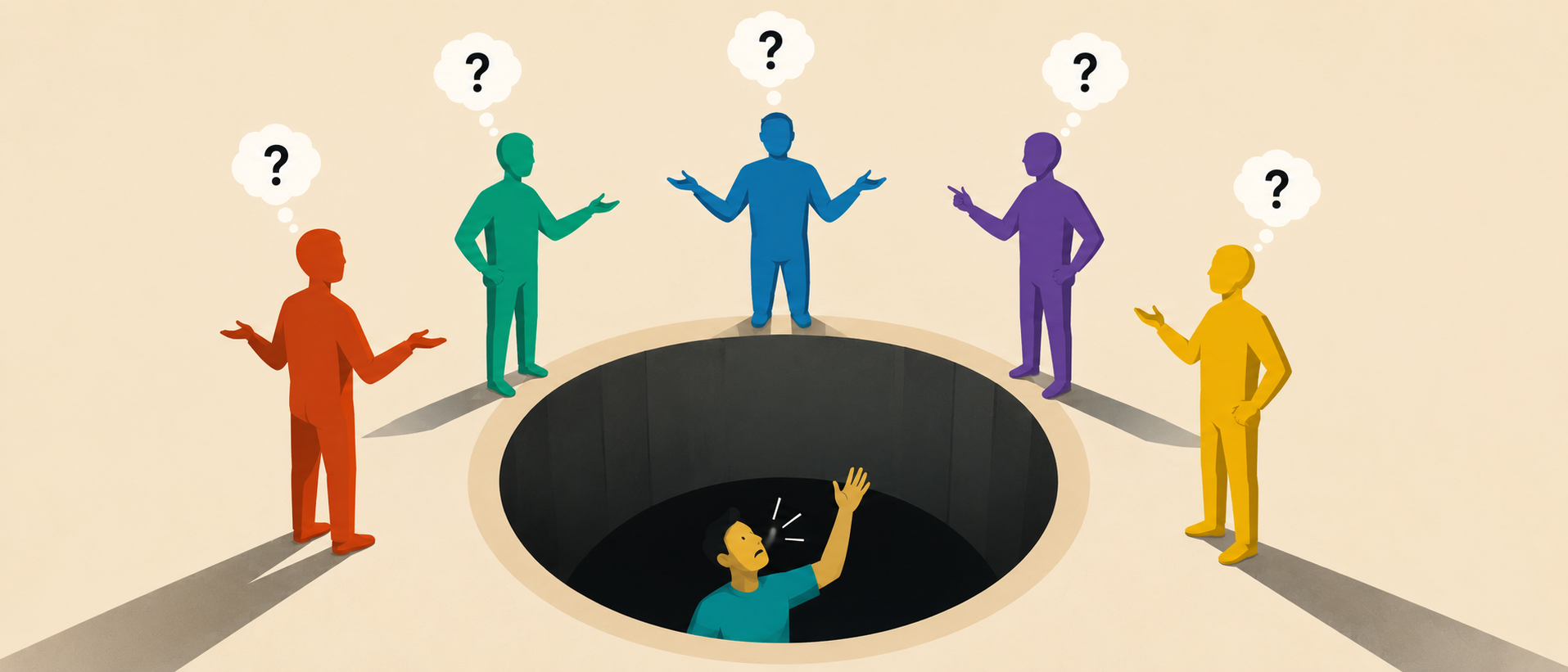
A social paralysis where individuals are drastically less likely to take action in an emergency when others are present. Everyone assumes someone else will do it, guaranteeing nobody does.
THE TRAP TEST
1 / 5Someone collapses in a busy train station. A crowd forms, staring.
👇 Choose one option:
The Diffusion of Responsibility
The Bystander Effect is a catastrophic glitch in human social programming. As the number of observers increases, the psychological burden of taking action is divided among them. If you are alone, the pressure to act is 100%. In a crowd of 10, your perceived responsibility drops to 10%. The brain rationalizes inaction by assuming that others are more qualified, have already acted, or that stepping forward will result in social embarrassment if the intervention is unwarranted.
The Enron Silence
The collapse of Enron wasn't just the work of a few corrupt executives; it was a masterclass in the corporate Bystander Effect. Hundreds of accountants, lawyers, and mid-level managers saw the fraudulent numbers and the off-balance-sheet shell games. But because everyone saw them, everyone assumed someone higher up the chain had authorized it or that another department would blow the whistle. The collective assumption that 'someone else will handle it' allowed the greatest accounting fraud in history to destroy billions in value.
The Accountability Override
Assume You Are Alone
In any crisis or shared problem, operate under the delusion that you are the only human being in the room. If you don't act, nobody will.
Targeted Delegation
If you need help from a group, never ask the room. Point at a specific individual, use their name, and assign them a direct task.
The 3-Second Rule
When you recognize intervention is needed, move within 3 seconds. Any longer, and your brain will invent a rationalization to remain passive.