
The Base Rate Fallacy
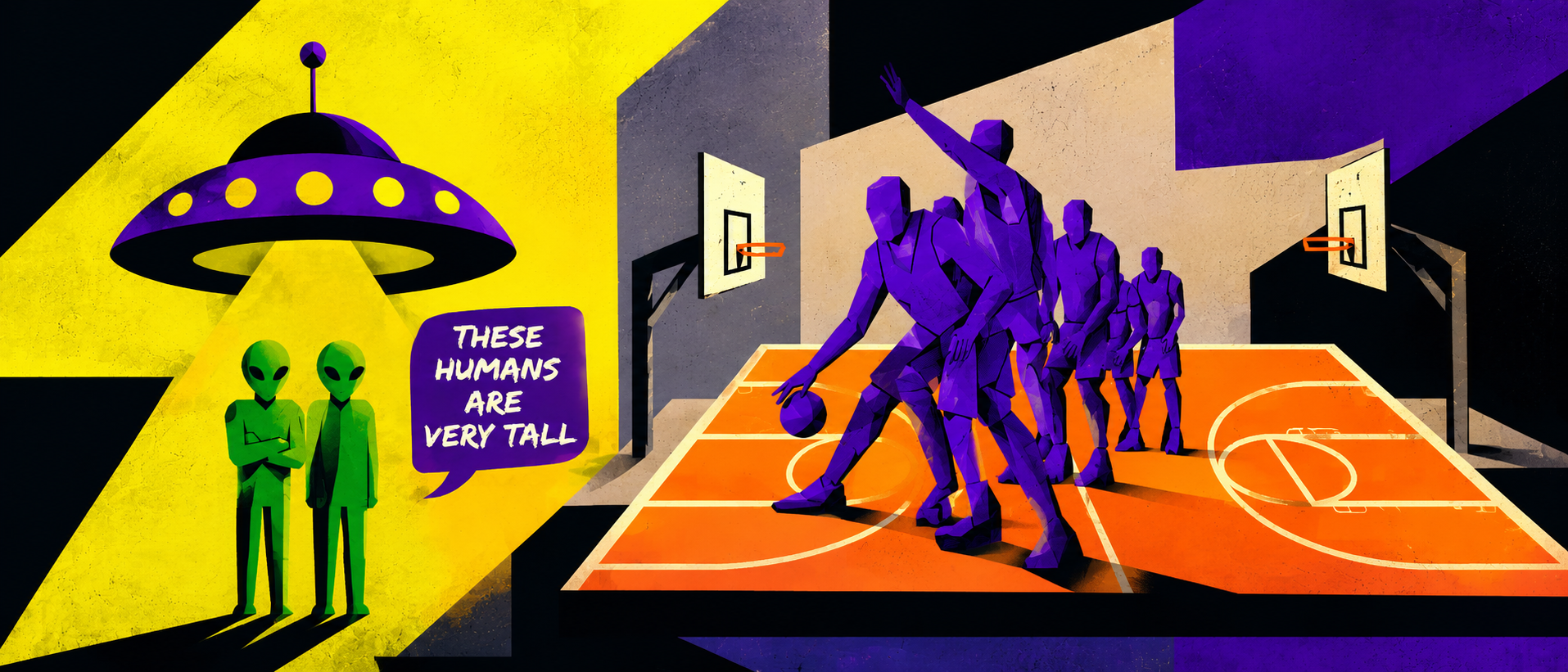
The lethal tendency to ignore underlying statistical probabilities (the base rate) in favor of specific, vivid, but entirely irrelevant new information.
THE TRAP TEST
1 / 5A rare disease affects 1 in 10,000 people. A test is 99% accurate. You test positive. Are you likely to have the disease?
👇 Choose one option:
The Triumph of Narrative Over Numbers
The human brain is wired for stories, not statistics. We evolved to pay attention to vivid, specific, localized threats and opportunities (a rustling bush, a compelling face). We did not evolve to process abstract probabilities. When presented with dry background data (the base rate) and a colorful, specific description, our brains instinctively discard the math and cling to the narrative, leading to catastrophic miscalculations of risk.
The False Positive Medical Nightmares
The Base Rate Fallacy plagues the medical industry, often leading to devastating misdiagnoses. In widespread screening programs for rare diseases, doctors and patients frequently misinterpret tests with 99% accuracy. Because they ignore the extremely low base rate of the disease in the general population, they fail to realize that out of 10,000 people, the 1 person who is actually sick will test positive, but 100 perfectly healthy people will also test positive (the 1% error rate). Healthy people are subsequently subjected to traumatic, invasive, and dangerous treatments for diseases they never had.
How to Think Like a Statistician
Start with the Base Rate
Before evaluating the specifics of a situation (a startup pitch, a medical test, a news story), ask: 'What is the average outcome for this entire category?' Let that be your anchor.
Strip the Narrative
Write down the facts of the decision without any adjectives, stories, or emotional context. Look at the naked data.
Bayesian Updating
Take the base rate, and only slightly adjust it based on the new, specific information. Do not throw the base rate away.